
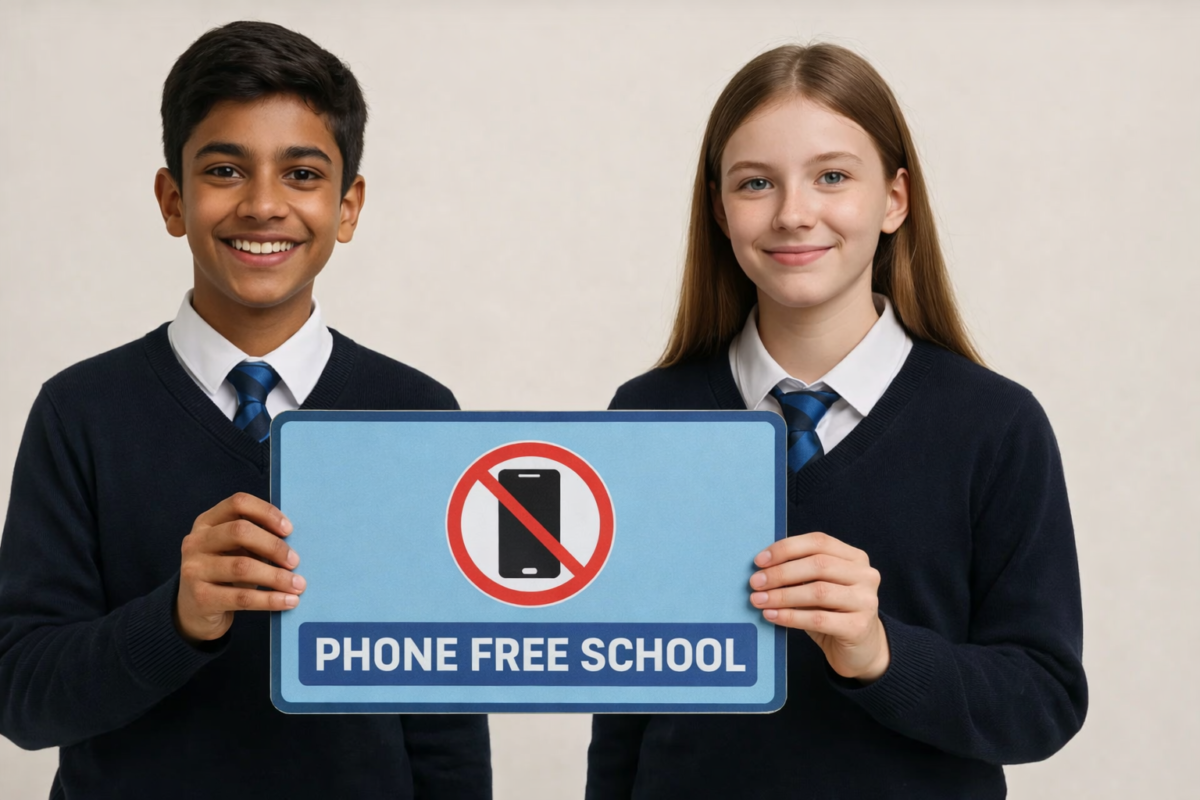
“Phone Free Schools” isn’t just a catchy phrase — it’s rapidly becoming the default expectation for schools in England.
In January 2026, the Department for Education (DfE) updated its non-statutory guidance to make the position clear: schools should be “mobile phone-free environments by default”, with anything else treated as an exception. (GOV.UK)
If you’re a school leader, DSL, governor, or trust executive, the challenge is rarely why you’d want Phone Free Schools — it’s how you make it work day-to-day without turning the gates into an argument and without adding unsustainable workload for staff.
This post breaks down what the latest guidance says, what Ofsted will look for, and how Clario mobile phone pouches can support a calm, consistent, and enforceable Phone Free Schools policy — while still allowing pupils to carry their device safely to and from school.
What the UK Government guidance actually expects from schools
The DfE guidance (updated 19 January 2026) is explicit about the scope of a Phone Free Schools approach:
- A policy should prohibit the use of mobile phones throughout the school day — including lessons, time between lessons, breaktimes and lunchtime. (GOV.UK)
- The policy should also cover other smart technology with similar functionality (for example, devices that can message, record audio/video, or receive notifications). (GOV.UK)
- The DfE expectation is that pupils do not have access to their phone during the school day. (GOV.UK)
- Schools should communicate the policy clearly to pupils and parents, and staff should enforce it consistently. (GOV.UK)
It’s also worth being precise about what this is (and isn’t):
- There is no statute or regulation that bans phones in schools in England. Schools have long been able to set restrictions through their behaviour policies. (House of Commons Library)
- The DfE guidance is non-statutory, but it is a strong statement of expectations — and it aligns with wider behaviour and safeguarding frameworks. (GOV.UK)
So, while schools retain autonomy, the national direction of travel is unmistakable: Phone Free Schools is the default.
Ofsted: why Phone Free Schools now matters even more
The updated guidance is also connected to inspection practice.
Ofsted has stated that from 1 April 2026, inspectors will discuss a school’s mobile phone policy, how it’s communicated, whether staff and pupils understand expectations, and how consistently it is followed — including its impact on learning, behaviour, and wellbeing. (educationinspection.blog.gov.uk)
Ofsted also notes:
- Where schools ban phones completely, inspectors will expect to see a clearly communicated policy and a phone-free environment in practice. (educationinspection.blog.gov.uk)
- If a school allows exceptions (or chooses not to follow the guidance), inspectors will want to understand the reasoning and explore the impact. (educationinspection.blog.gov.uk)
In other words, Phone Free Schools is no longer just an internal behaviour decision — it’s increasingly part of how schools explain culture, routines, and safeguarding.
The “why”: what the guidance says about benefits and risks
The DfE guidance highlights several reasons schools are moving toward Phone Free Schools:
- Reduced distraction and disruption in lessons (including unauthorised use). (GOV.UK)
- Reduced risk of bullying linked to phones and online behaviour. (GOV.UK)
- More time for positive socialising, exercise, and healthier breaktimes — with screen time potentially displacing these activities. (GOV.UK)
- A calmer, safer school environment supported by consistent staff enforcement and clear expectations. (GOV.UK)
The parental communication guidance also includes helpful “facts and figures” schools can use when building buy-in (for example, national survey statistics on unauthorised phone use in lessons, and evidence about online bullying experiences). (GOV.UK)
The “how”: four implementation models schools typically use
The DfE recognises there are different ways to achieve Phone Free Schools in practice, and leaves implementation to headteachers and trust leaders. (GOV.UK)
In reality, most schools choose one of these models:
1) “Off and away” (in bags, not seen or heard)
Simple in theory, but difficult to police consistently. If a phone rings in a bag, staff are forced into enforcement moments that can escalate.
2) Hand-in at the start of the day (central collection)
The guidance notes some schools successfully collect phones at the start of the day. (GOV.UK)
This can be effective, but it creates pinch points (queues), plus storage, security, and admin overhead.
3) Lockers or secured storage on site
The guidance also notes lockers as a route to removing distraction while allowing pupils to have a phone for travel. (GOV.UK)
This can work well, but lockers have cost, space, and maintenance implications.
4) Secure phone pouches (device stays with the pupil, but is inaccessible)
This is where solutions like Clario mobile phone pouches fit naturally: they support Phone Free Schools by making the policy easier to follow and easier to enforce.
Why Clario pouches are a practical tool for Phone Free Schools
A Phone Free Schools policy only works when it becomes routine — predictable, consistent, and low-drama.
Clario pouches support that in a few important ways:
They reduce “policy friction” at the school gate
A common parent concern is travel safety: “I want my child to have their phone on the way to and from school.”
A pouch model supports that concern while still aligning with the DfE expectation that pupils don’t have access to their device during the school day. (GOV.UK)
They make enforcement simpler and more consistent
The DfE is clear that staff should consistently enforce the policy and that pupils should understand expectations and consequences. (GOV.UK)
A pouch approach moves enforcement away from repeated, individual confrontations (“Put it away”) toward a clear routine (“Phones are pouched at the start of the day”).
They support a calmer culture (not constant policing)
Phone Free Schools isn’t meant to become a daily battle. Done well, it becomes part of the school’s culture — and culture is built through routines pupils can actually follow.
They help schools communicate a balanced message to parents
The DfE communication guidance emphasises the importance of parental support, clear communication, and reassurance that parents can contact children via the school office. (GOV.UK)
Pouches can be positioned as a “best of both worlds” approach:
- pupils keep their phone for travel,
- but school remains a phone-free learning environment.
What your Phone Free Schools policy should include (aligned with guidance)
If you want your Phone Free Schools approach to be robust (and inspection-ready), build your policy around these elements:
1) Scope and definitions
Be explicit about:
- mobile phones
- smart watches and similar devices that can message/record/receive notifications (GOV.UK)
- earbuds/headphones (if you include them)
2) The rule: no access throughout the school day
Match the guidance language: lessons, between lessons, breaktimes and lunchtime. (GOV.UK)
3) Storage method and routines
Explain what happens:
- at arrival
- during the day
- at dismissal
- during trips, exams, or PE
4) Communication expectations
The DfE expects the policy to be communicated clearly, published, and understood by pupils, parents, and staff. (GOV.UK)
5) Staff expectations
DfE states staff should not use personal phones in front of pupils during the school day (with limited professional exceptions). (GOV.UK)
Including this in your policy helps avoid the “double standard” complaint.
6) Sanctions and confiscation
DfE states schools can use a range of sanctions, including confiscation and detentions, and can feel confident using confiscation powers proportionately. (GOV.UK)
7) Safeguarding escalation
DfE also notes that certain incidents may raise safeguarding concerns and should trigger DSL processes where appropriate. (GOV.UK)
Reasonable adjustments: making Phone Free Schools inclusive and lawful
Phone Free Schools should be “default,” but the guidance is also clear that schools must comply with other legal duties — including reasonable adjustments.
Examples in the guidance include:
- disability-related adjustments under the Equality Act 2010 (GOV.UK)
- medical needs, including examples such as diabetes monitoring linked to a phone (GOV.UK)
A strong policy does two things at once:
- sets a clear Phone Free Schools baseline for everyone,
- explains the process for exceptions (rather than leaving it ad hoc).
Practical tip: document exceptions as a specific purpose, specific times, specific locations approach — which the guidance explicitly suggests as a way to allow flexibility without undermining the whole policy. (GOV.UK)
Winning parental support for Phone Free Schools (without triggering backlash)
The DfE’s companion document on communicating with parents is full of practical steps schools can borrow. (GOV.UK)
A parent-friendly rollout typically includes:
- Advance notice and clear rationale (learning, wellbeing, behaviour) (GOV.UK)
- Consultation with pupils and parents where appropriate (GOV.UK)
- A short trial period before full enforcement (GOV.UK)
- Multiple communication channels (newsletters, email, in-person events) (GOV.UK)
- Reassurance: parents can contact pupils via the school office during the day (GOV.UK)
Clario pouches can strengthen that message, because they give parents a tangible answer to:
“What if my child needs their phone for the journey?”
Frequently asked questions about Phone Free Schools
“Is a Phone Free Schools policy mandatory?”
In England, there is no statute banning phones. But the DfE guidance sets a clear expectation that schools should be phone-free by default. (House of Commons Library)
“What about sixth formers?”
The guidance suggests schools may consider limited, carefully controlled access for sixth form in certain times/locations — without allowing use in front of younger pupils — and still applying sanctions for misuse. (GOV.UK)
“Can we confiscate phones if pupils breach the policy?”
Yes. DfE guidance supports proportionate confiscation as a sanction when a policy is clearly breached, and describes the legal protections for staff acting lawfully. (GOV.UK)
“Do we need to allow exceptions for medical or SEND reasons?”
Where necessary, yes. The guidance highlights duties around reasonable adjustments and supporting pupils with medical conditions, and gives examples where phone access may be required. (GOV.UK)
“Will Ofsted ask about this?”
Ofsted has said inspectors will discuss and evaluate mobile phone policies and how consistently they are implemented from 1 April 2026. (educationinspection.blog.gov.uk)
Bringing it all together: Phone Free Schools that actually work
The shift toward Phone Free Schools is happening quickly — and it’s grounded in updated national guidance and inspection expectations. (GOV.UK)
But the difference between a policy that exists on paper and one that works in real life is implementation:
- Clear rules
- Simple routines
- Consistent enforcement
- A parent communication plan
- A practical storage solution
That’s why many schools are now pairing their policy with a physical tool that makes compliance the easy option.
Clario mobile phone pouches are designed to support Phone Free Schools in a way that’s:
- simple to explain,
- easy to apply consistently,
- and sensitive to the “travel safety” concerns families raise most often.
If you’re planning a new Phone Free Schools rollout (or tightening an existing policy to align with the January 2026 guidance), a pouch-based approach can be the difference between constant enforcement and a calm, embedded routine.
Compliance note: This article summarises publicly available UK government and related public-body guidance. Schools should consider their own context and legal duties when implementing policy. (GOV.UK)