
Implementing a mobile phone policy in schools is no longer a marginal behaviour decision — it is now central to safeguarding, behaviour culture, and inspection readiness.
With updated national guidance reinforcing that schools should operate as phone-free environments by default, governors and senior leadership teams (SLT) are increasingly asking the same question:
How do we implement a mobile phone policy in schools that is compliant, enforceable, proportionate — and actually works in practice?
This practical guide is written specifically for governors, headteachers, trust leaders, DSLs and behaviour leads. It outlines:
- What current UK government guidance expects
- How Ofsted will approach mobile phone policies
- Governance responsibilities
- Legal considerations (including Equality Act duties)
- Practical implementation models
- Communication strategy
- And how physical solutions such as secure phone pouches can support consistent enforcement
Why Mobile Phone Policy in Schools Has Become a Governance Issue
Historically, mobile phone use was treated as a classroom management issue. Today, it intersects with:
- Behaviour and culture
- Safeguarding
- Online harm
- Social media misuse
- Cyberbullying
- Staff workload
- Inspection frameworks
The Department for Education (DfE) guidance (updated January 2026) sets the clear expectation that schools should be mobile phone-free environments by default, meaning pupils should not have access to their phones during the school day.
Importantly:
- There is no statute banning phones in schools in England.
- Schools have the power to restrict use through their behaviour policy.
- The guidance is non-statutory — but it sets a strong national direction of travel.
For governors and SLT, this shifts mobile phone policy from an operational detail to a strategic leadership decision.
Step 1: Clarify the Strategic Rationale
Before drafting policy language, leadership teams should align on why the change is being made.
Typical drivers include:
- Reducing classroom disruption
- Improving focus and academic outcomes
- Reducing social media conflict during the school day
- Addressing cyberbullying incidents
- Supporting safeguarding
- Reducing staff time spent policing phones
- Preparing for inspection scrutiny
A strong mobile phone policy in schools should not be framed as punitive. Instead, it should be presented as:
- A learning culture decision
- A safeguarding decision
- A wellbeing decision
Governors should minute the strategic rationale to demonstrate oversight and challenge.
Step 2: Align the Policy with National Guidance
An effective mobile phone policy in schools should reflect the key expectations set out in government guidance.
Your policy should clearly state that:
- Mobile phones must not be used during lessons
- Mobile phones must not be used between lessons
- Mobile phones must not be used at breaktime
- Mobile phones must not be used at lunchtime
- The restriction applies to smart devices with similar functionality
The emphasis should be on no access during the school day, not simply “don’t use unless told”.
This clarity reduces ambiguity — which is where most enforcement issues arise.
Step 3: Decide on Your Implementation Model
There are four common approaches to implementing a mobile phone policy in schools. Each has governance implications.
1. “Off and Away” (In Bags)
Pupils keep phones in bags and must not use them.
Advantages:
- No infrastructure cost
- Simple to communicate
Risks:
- Difficult to police consistently
- High number of low-level enforcement incidents
- Phones still accessible
- Inconsistent staff application
This model relies heavily on constant staff vigilance.
2. Central Collection at Start of Day
Phones are handed in and stored centrally.
Advantages:
- Strong control
- Clear removal of access
Risks:
- Queueing at arrival
- Administrative burden
- Storage security concerns
- Liability perception
Governors should consider insurance and operational impact.
3. Lockers or Secure Storage
Phones are stored in lockers.
Advantages:
- Reduced staff handling
- Access removed during the day
Risks:
- Installation cost
- Space requirement
- Maintenance
- Damage disputes
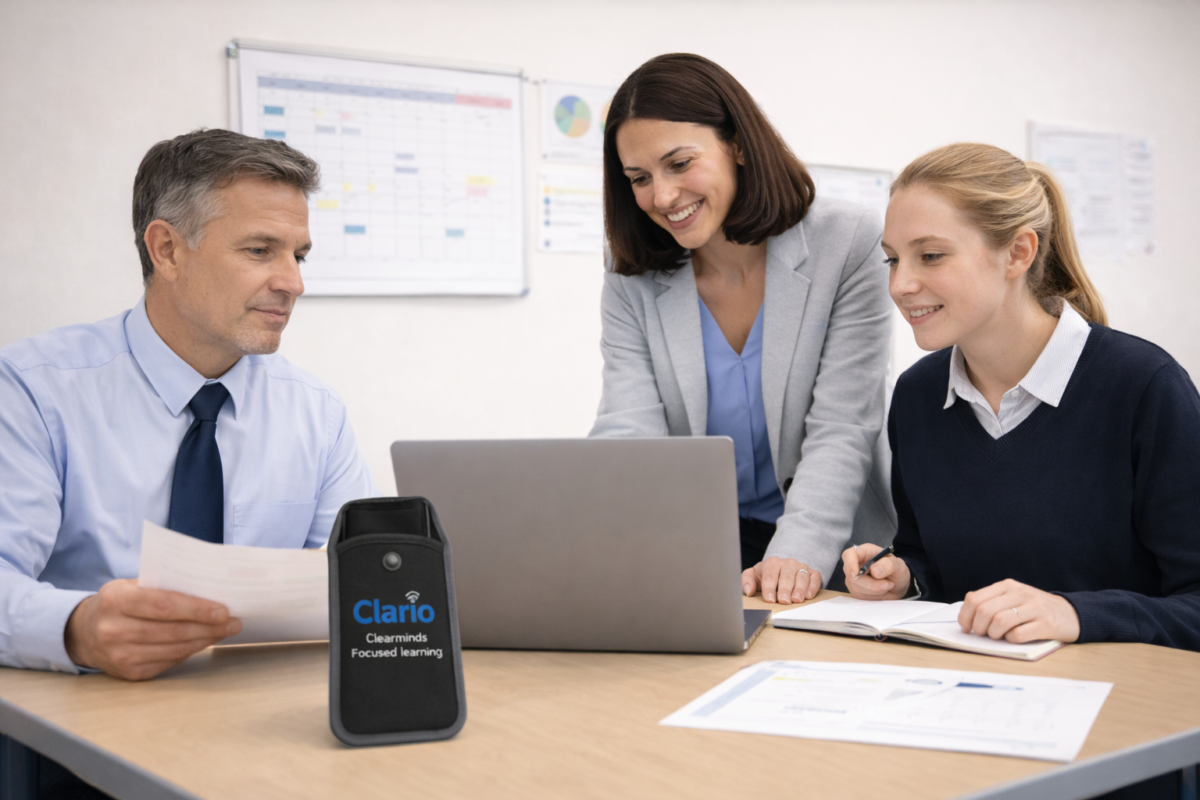
4. Secure Phone Pouches (Device Remains with Pupil but Is Inaccessible)
Under this model, pupils place their phone inside a secure pouch that locks for the duration of the school day.
Advantages:
- Reduces access without central storage
- Avoids mass hand-in
- Supports travel safety concerns
- Simple routine
- Reduces enforcement friction
For many schools implementing a mobile phone policy in schools aligned with national expectations, secure pouch systems provide a balance between control and practicality.
Step 4: Ensure Legal and Equality Compliance
Governors must ensure the mobile phone policy in schools complies with broader legal duties.
Equality Act 2010 – Reasonable Adjustments
Some pupils may require phone access for:
- Medical monitoring (e.g., diabetes apps)
- Specific SEND needs
- Communication support
The policy should:
- Establish a clear baseline rule
- Outline a formal exemption process
- Define when, where and how access is permitted
Avoid ad hoc decisions — documented processes protect the school.
Safeguarding Escalation
Mobile phone misuse may intersect with:
- Online exploitation
- Image sharing
- Bullying
- Harassment
The policy should link directly to:
- Safeguarding policy
- Behaviour policy
- Anti-bullying policy
Governors should check that DSL processes align.
Step 5: Define Enforcement and Sanctions Clearly
Ambiguity undermines policy.
Your mobile phone policy in schools should define:
- What constitutes a breach
- What the first sanction is
- Escalation stages
- Confiscation procedures
- Return procedures
- Parent notification expectations
Staff confidence is critical. Inconsistent enforcement is one of the biggest risk factors for policy failure.
Governors should ask:
- Is enforcement realistic?
- Does the system reduce workload or increase it?
- Are staff supported?
Step 6: Consider Ofsted Readiness
From April 2026, inspectors are expected to discuss mobile phone policy implementation, including:
- Clarity of expectations
- Staff consistency
- Impact on behaviour
- Impact on learning
- Communication to parents
Inspectors may ask governors:
- Why did you choose this approach?
- How do you monitor its effectiveness?
- Has it reduced incidents?
- How do you handle exceptions?
A well-implemented mobile phone policy in schools should generate evidence such as:
- Reduction in phone-related behaviour logs
- Reduced online conflict during the day
- Positive staff survey feedback
- Clear published policy documentation
Step 7: Communicate Early and Strategically
One of the biggest implementation risks is parental backlash.
Effective communication should:
- Explain the rationale clearly
- Emphasise learning and safeguarding
- Acknowledge travel safety concerns
- Reassure that parents can contact pupils via the school office
- Outline a phased rollout
Governors should ensure:
- Policy is published on the website
- FAQs are provided
- Staff are briefed before parents
- Messaging is consistent
A mobile phone policy in schools should never feel like a surprise.
Step 8: Reduce “Friction Points”
Policy success depends on routine.
Ask:
- What happens at the gate?
- Who checks compliance?
- How do we prevent daily confrontation?
- How do we avoid staff burnout?
Secure pouch systems can reduce friction by:
- Making compliance visible
- Removing repeated verbal correction
- Providing a predictable daily routine
- Supporting fairness (“everyone follows the same rule”)
The easier the system is to follow, the more sustainable it becomes.
Step 9: Pilot Before Full Rollout
Many schools benefit from:
- A half-term pilot
- Year-group phased rollout
- Feedback collection
- Adjustment before full launch
Governors should receive a review report before full implementation.
Step 10: Monitor and Review
A mobile phone policy in schools is not “set and forget”.
Track:
- Behaviour incidents linked to phones
- Safeguarding referrals
- Staff feedback
- Student feedback
- Parent feedback
Report termly to governors.
Common Mistakes to Avoid
1. Vague Language
“Phones should not be seen or heard” leaves room for argument.
2. Inconsistent Staff Modelling
If staff visibly use personal phones, credibility drops.
3. Weak Enforcement
If sanctions are rarely applied, policy fails quickly.
4. Ignoring Travel Safety Concerns
Parents often support policy — but want reassurance.
5. No Exemption Framework
Ad hoc exceptions undermine fairness.
Governance Checklist: Mobile Phone Policy in Schools
Governors should be able to answer:
- Does the policy align with national guidance?
- Is enforcement realistic?
- Are Equality Act duties addressed?
- Is there a clear communication plan?
- How will impact be measured?
- How does this improve learning culture?
- What physical system supports the policy?
Why Physical Systems Matter
Policy language alone does not create culture.
A mobile phone policy in schools succeeds when:
- Expectations are visible
- Routine is predictable
- Enforcement is low-conflict
- Staff workload is reduced
- Pupils understand the boundary
Secure phone pouch systems such as Clario provide:
- A practical method of removing access
- Support for travel safety
- A consistent daily routine
- Reduced confiscation disputes
- Lower administrative burden compared to central storage
For governors and SLT, the key question is not simply:
“Do we ban phones?”
It is:
“How do we implement a mobile phone policy in schools that is calm, consistent and defensible?”
Final Thoughts: From Policy to Culture
A mobile phone policy in schools should not feel like a battle.
When implemented strategically, it becomes:
- Part of the school’s behaviour culture
- A safeguarding strength
- An inspection-ready practice
- A wellbeing improvement
- A staff workload reducer
The difference between policy and practice is implementation.
Governors and SLT who:
- Align with guidance
- Communicate clearly
- Choose practical enforcement systems
- Monitor impact
- And review consistently
… are far more likely to embed a successful Phone Free Schools culture.